Warm-season grass
Bermuda Grass
Bermuda is the second most common lawn grass in the state and the one you see on ball fields and in wide open sunny yards. It loves heat, shrugs off drought once it is rooted, and heals fast from wear. It also goes fully dormant and turns tan over winter, which some people love for the summer color and others cannot stand for the brown season.
At a glance
- Season
- Warm season
- Also called
- common and hybrid bermudagrass
- Best window
- April 1 to July 31
- Soil temperature
- 65°F soil and rising
- Seed per 1,000 sq ft
- 1 to 2 lb of seed
How to spot it
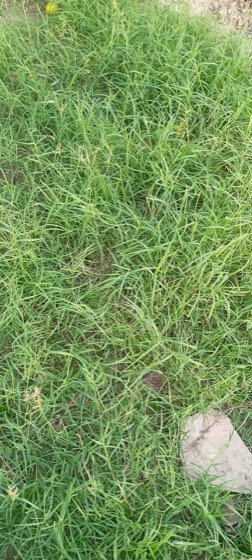
Fine textured and dense, a rich green in summer. It spreads hard by both above-ground runners and underground stems, so it fills in fast and will try to march into your flower beds.
Looking after bermuda grass
What this grass wants through the year.
- Mowing
- Mow it low and mow it often. Half an inch to an inch and a half keeps common bermuda looking right, and the fancy hybrids want it even lower with a reel mower. Let it get tall and it turns stemmy and scalps when you finally cut it.
- Watering
- Low water needs once established. It is one of the most drought-tough lawns we can grow, and it will brown out and bounce back rather than die.
- Feeding
- Feed it in the growing season, late spring through summer, which is again the opposite of fescue. It is a heavy nitrogen user when it is actively growing. Do not feed it going into winter dormancy.
- Weeds & pests
- Winter weeds show up while it is dormant and brown, since nothing is competing with them. A pre-emergent in late winter handles most of that. It is otherwise one of the tougher grasses pest wise.
- Planting & establishing
- Late spring into early summer, once the soil is good and warm. You can seed common bermuda, but the hybrids go down as sod or sprigs. It establishes quickly compared to most grasses.
Good for
Sunny, high-traffic yards where nobody minds a tan lawn in winter. Kids, dogs, and full sun are no problem for it.
Watch out for
Shade and boundaries. It sulks under trees, and it will invade beds, walkways, and the neighbor's yard if you let it. Edging becomes a regular job.
Working on your lawn
Knowing the grass is half of it
You know what you have now. The calculators work out how much seed, feed or sod Bermuda Grass takes, and the calendar says whether this is even the month to be buying it.
Common questions
- Why does my bermuda lawn turn brown in winter?
- That is dormancy, not death. Bermuda is a warm-season grass, so once soil temperatures drop it goes to sleep and turns tan until spring. It greens back up on its own when the weather warms. Some people overseed with ryegrass for winter color, though that adds work.
- Will bermuda grass grow in shade?
- Not well. Bermuda is a full-sun grass and it thins out badly under trees or on the north side of a house. If most of your yard is shaded, tall fescue or, in the coastal areas, St. Augustine is a better bet.
Care guidance reflects general practice for the Carolinas. Your soil, sun, and site vary, so a soil test and your local extension office are the last word on your own lawn.