Warm-season grass
Bahia Grass
Bahia grass is a survivor. It puts down deep roots, handles drought and poor sandy soil, and asks for almost nothing, which is why you see it on roadsides and low-input properties in the coastal areas. It is coarse and throws up tall Y-shaped seedheads, so it reads more utility than showpiece, but for a large low-maintenance area it holds ground where finer grasses fail.
At a glance
- Season
- Warm season
- Also called
- bahiagrass
- Best window
- March 1 to June 30
- Soil temperature
- 65°F to 75°F soil
- Seed per 1,000 sq ft
- 5 lb of seed
How to spot it
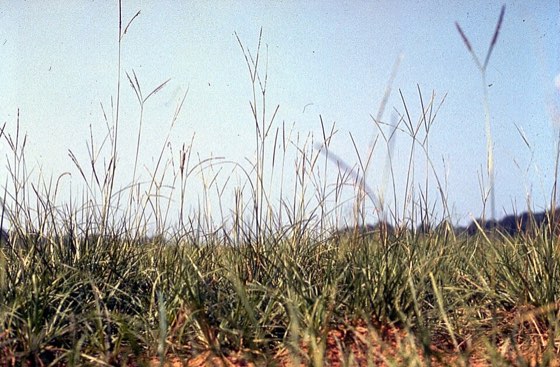
Coarse, open growth with distinctive tall seed stalks that split into a Y or a few branches at the top. Lighter, sparser look than a dense lawn grass.
Looking after bahia grass
What this grass wants through the year.
- Mowing
- The seedheads are the reason you mow. They come up fast and tall, so frequent mowing is really about keeping those down.
- Watering
- Very drought tolerant thanks to a deep root system. This is one of its best traits on dry sandy sites.
- Feeding
- Low needs. It is adapted to poor soil and does not require much fertility to hang on.
- Weeds & pests
- Generally low pest pressure. Its open growth means weeds can find gaps, so it is not a weed-smothering turf.
- Planting & establishing
- Warm season, usually from seed. It is often used for larger, lower-input areas rather than a manicured yard.
Good for
Large, low-maintenance areas on poor sandy soil, and dry sites where drought tolerance matters more than a fine texture.
Watch out for
Looks and density. The coarse texture and constant seedheads make it a hard sell for a tidy front lawn, and it does not form the tight turf that bermuda or zoysia do.
Working on your lawn
Knowing the grass is half of it
You know what you have now. The calculators work out how much seed, feed or sod Bahia Grass takes, and the calendar says whether this is even the month to be buying it.
Common questions
- Is bahia grass good for a home lawn?
- It depends on your priorities. For a big, dry, low-input area on sandy soil, bahia is tough and drought proof and asks for little. For a manicured front lawn, its coarse texture and constant tall seedheads make it a poor fit compared to bermuda, zoysia, or centipede.
Care guidance reflects general practice for the Carolinas. Your soil, sun, and site vary, so a soil test and your local extension office are the last word on your own lawn.